

How Big Do Havanese Get? Size and Growth Guide
A Havanese can curl up beside you on the couch, ride comfortably in a travel carrier, and still bring a wonderfully big personality to the household. So, how big do Havanese get? Most adults remain genuinely small dogs, usually standing about 8.5 to 11.5 inches tall at the shoulder and weighing roughly 7 to 13 pounds when kept at a healthy body condition.
That manageable size is one reason Florida families, couples, and retirees are so drawn to the breed. A Havanese is small enough for close companion life without feeling overly delicate or timid. They are sturdy little dogs with an affectionate, people-centered nature, and their size makes day-to-day care easier in many homes.
How Big Do Havanese Get as Adults?
Havanese are a toy-sized breed, although many people find them a bit more substantial than they expected. Their body is compact, balanced, and slightly longer than it is tall. A healthy adult should look lively and well-proportioned, not overly thin beneath the coat and not round or heavy through the middle.
Most full-grown Havanese fall into these general ranges:
Height: 8.5 to 11.5 inches at the shoulder
Weight: about 7 to 13 pounds
Typical adult age: around 10 to 12 months for most physical growth
Those numbers are helpful planning tools, but they are not a guarantee for every puppy. Some Havanese stay near the lower end of the range, while others have a slightly sturdier build and mature closer to the upper end. Both can be perfectly normal when the dog is well bred, healthy, and correctly conditioned.
Height is measured from the ground to the top of the shoulders, called the withers. It is not measured to the top of the head, so a Havanese may look taller when alert, especially with that full, soft coat framing the body.
Why One Havanese May Be Bigger Than Another
The best clue to a puppy's likely adult size is its family. Looking at the puppy's parents and close relatives gives a more useful picture than trying to predict adult weight from one early puppy weigh-in. A knowledgeable Havanese breeder can explain the sizes and builds present in a particular line and help set realistic expectations.
Sex can play a small role, with males sometimes carrying a little more bone or weight than females. However, the difference is often subtle. A petite male may be smaller than a solidly built female, so sex alone is not a dependable size predictor.
Genetics matter most, but nutrition, overall health, activity level, and spay or neuter timing can influence how a dog develops and maintains weight. A puppy should never be overfed in an effort to make it grow bigger. Steady, appropriate growth is much healthier than rapid weight gain.
Havanese Puppy Growth by Age
Havanese puppies grow quickly during their first several months. They begin life tiny, then seem to change from week to week as their legs lengthen, their body gains shape, and their confidence grows. By about six months old, many puppies are well on their way to their adult height, although they still have plenty of maturing ahead.
From six to nine months, a Havanese may look a little lanky or uneven. That is normal for many small-breed puppies. Their frame is developing, and the adult coat may also be coming in, which can make them appear larger one week and smaller the next.
Most Havanese reach close to their adult height by 9 to 10 months. They may continue adding a little body substance through 12 months and sometimes beyond. Mental maturity also takes longer than physical growth. Your one-year-old Havanese may be full-sized while still acting delightfully puppyish.
A regular wellness schedule with your veterinarian is the best way to track healthy growth. Rather than focusing on the number on the scale alone, your veterinarian can assess body condition, muscle, energy level, and whether your puppy is growing at an appropriate pace.
Small Does Not Mean Fragile
A well-built Havanese is a cheerful, active companion. They enjoy play, short walks, training games, and being part of whatever their people are doing. Their small size makes them easy to lift when necessary, but they should not be treated like a stuffed animal or carried everywhere instead of being allowed to move, explore, and build confidence.
For families with children, the key is kind supervision. Young children should learn to sit on the floor to greet a puppy, avoid grabbing, and give the dog a quiet place to rest. A Havanese can be a lovely family dog, but every puppy deserves gentle handling and a home that respects its small body.
Their size also works well for many living arrangements. A Havanese does not need a large yard to be content, though secure outdoor time and daily activity are still valuable. They can thrive in an apartment, condo, retirement community, or single-family home when they receive attention, training, and regular companionship.
The Coat Can Make a Havanese Look Larger
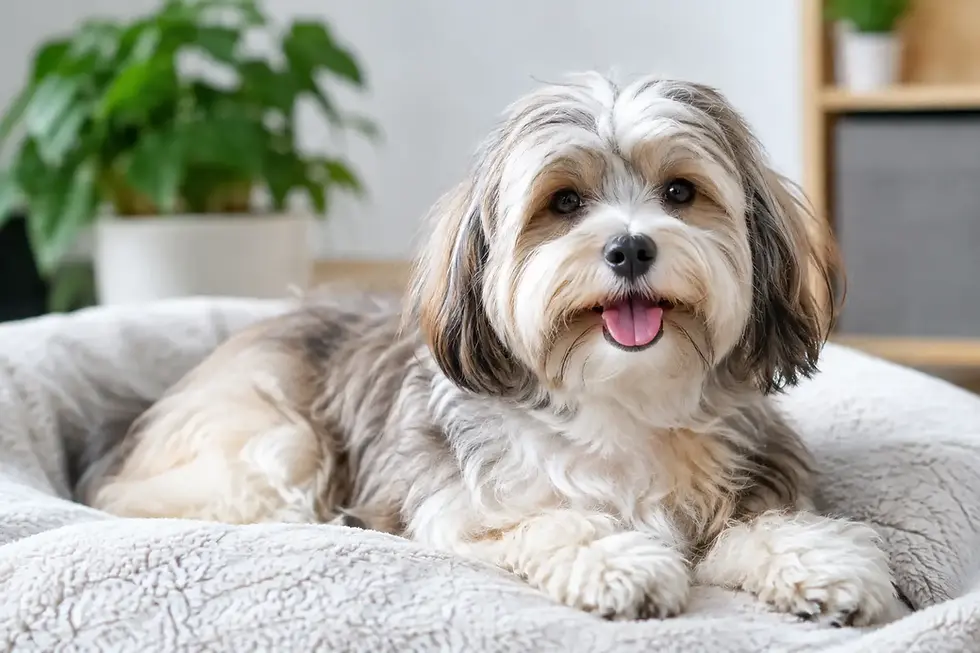
Havanese have a long, silky coat that can create quite an illusion. A dog at a healthy 10 pounds may look much bigger when fully fluffed after a bath or when the coat is grown out. Conversely, a puppy in a shorter trim may appear especially petite.
This is why judging size by photographs can be tricky. The hands-on feel matters more. You should be able to feel your dog's ribs with light pressure, see a waist from above, and notice a gentle tuck behind the ribs from the side. If the coat makes that difficult to assess, ask your groomer or veterinarian for help.
Regular grooming is part of responsible Havanese ownership, whether you keep the coat long or choose a shorter pet trim. A clean, brushed coat does more than keep your dog looking adorable. It also allows you to notice changes in weight, skin, or body shape sooner.
Planning for a Full-Grown Havanese
Because adult Havanese are small, most households find their practical needs refreshingly manageable. They generally fit comfortably in a small dog bed, a properly sized crate, and a vehicle travel carrier. Their food portions are modest compared with those of medium or large breeds, although quality and portion control still matter.
Small size comes with a few responsibilities. Choose stairs, furniture access, and play spaces with safety in mind, particularly while your puppy is young. Repeated leaps from a high couch or bed can put unnecessary stress on little joints. A pet ramp, a low step, or simply lifting your puppy down can be a smart habit.
It is also wise to use a secure harness for walks rather than relying on a collar alone. A properly fitted harness gives you better control without putting pressure on the neck. Since Havanese are social and curious, a secure leash setup helps keep neighborhood walks safe and enjoyable.
Choosing a Puppy With Size in Mind
If you have a particular preference for a smaller or sturdier Havanese, share that early in the conversation with your breeder. The right approach is not to demand an exact future weight, because living dogs do not come with guarantees. Instead, discuss the puppy's parents, current growth, build, and the general size patterns in the family line.
Be cautious about anyone promising an unusually tiny adult dog. Very small size is not automatically a benefit, especially if it is paired with poor structure or health concerns. For most families, a sound, confident Havanese within the normal breed range is a far better goal than chasing the smallest possible number on a scale.
At Yuppy Puppy Havanese in Ocala, Florida, we believe a puppy should be matched to the life waiting for them, not just a measurement on paper. A happy Havanese grows best in a home that values gentle care, daily companionship, and plenty of room for that famously oversized heart.


Comments