

Do Havanese Shed a Lot? What Families Should Know
A black shirt, a light-colored sofa, and a Havanese curled up beside you can tell a very different story than life with a heavy-shedding breed. So, do Havanese shed a lot? For most families, the answer is no. Havanese are generally considered low-shedding dogs, which is one reason they are such a popular choice for people who want an affectionate small companion without finding loose fur on every surface.
That said, low shedding does not mean no shedding and it definitely does not mean no grooming. A Havanese coat needs regular hands-on care to stay clean, comfortable, and free of tangles. For Florida families considering this cheerful breed, understanding that difference makes it much easier to decide whether a Havanese is the right fit.
Do Havanese Shed a Lot Compared With Other Dogs?
Havanese shed much less visibly than many common breeds. A Labrador Retriever, German Shepherd, or Beagle can leave noticeable hair on floors, furniture, car seats, and clothing throughout the year. A Havanese naturally loses hair too, but much of that loose hair stays caught in the surrounding coat until it is brushed out.
This is why a Havanese home may look relatively fur-free while the dog still needs consistent grooming. The hair has not disappeared. It is simply staying in the coat rather than dropping freely around the house.
For many owners, that is a worthwhile trade-off. Instead of frequent vacuuming and lint rolling, you spend time brushing your dog. A well-kept Havanese coat is soft, lovely, and far less likely to blanket your furniture, but it asks for attention in return.
Why Havanese Are Considered Low-Shedding
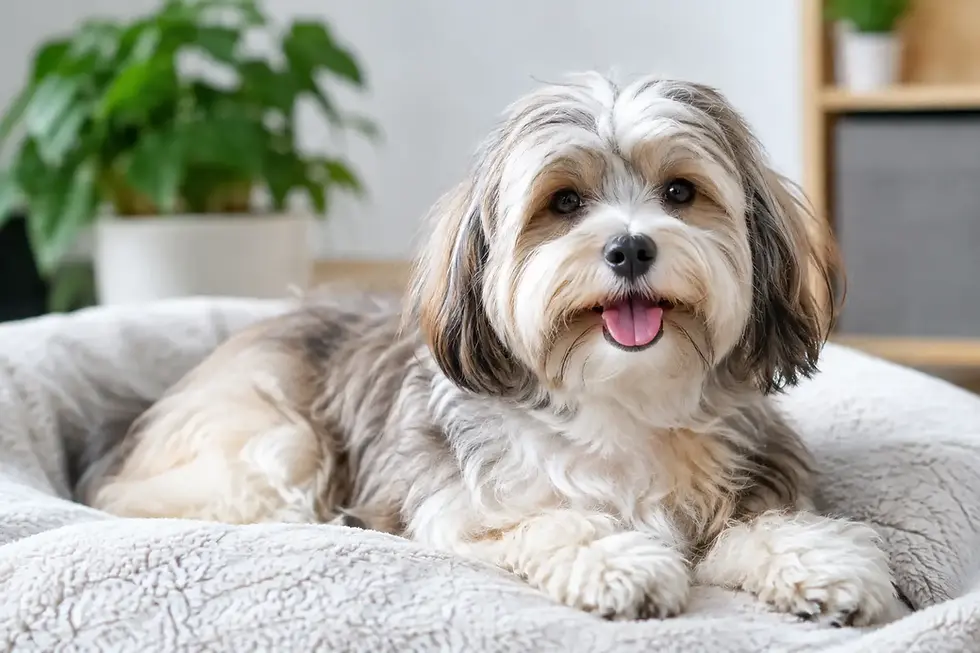
The Havanese has a long, soft coat that is often silky or gently wavy. Individual dogs can have somewhat different textures, and coat changes are common as puppies mature. Regardless of texture, the breed is known for shedding lightly compared with many other dogs.
A Havanese does not usually go through the dramatic seasonal coat blow that owners see in many double-coated breeds. You may notice a little more hair during brushing at certain times of year or during a puppy-to-adult coat transition, but it is usually manageable with a regular routine.
Puppies are especially worth mentioning. Their fluffy puppy coats can be deceptively easy at first, then begin tangling more readily as the adult coat comes in. This transition often happens gradually and can catch new owners off guard. Brushing that worked once or twice a week for a young puppy may not be enough as that adult coat develops.
Low Shedding Does Not Mean Hypoallergenic
People sometimes use “low shedding” and “hypoallergenic” as if they mean the same thing. They do not. No dog is completely hypoallergenic.
Dog allergies are commonly triggered by proteins in dander, saliva, and urine, not just by loose fur. Because Havanese shed less, they may be easier for some allergy-sensitive people to live with. Less loose hair can mean less dander traveling around the home. Still, one person may do wonderfully with a Havanese while another reacts.
If allergies are a concern, spend meaningful time around adult Havanese before committing to a puppy. A quick visit is not always enough to predict a reaction, but it is more useful than choosing a breed based on a label alone. Keeping the dog clean, brushing regularly, washing bedding, and using a good home-cleaning routine can also help reduce allergens.
What Grooming a Havanese Really Requires
A Havanese can wear a long, flowing coat or a shorter companion trim. Either look can be adorable, but neither is maintenance-free. The right choice depends on how much at-home grooming your household enjoys and can reliably keep up with.
A longer coat needs brushing several times each week, and often daily attention in areas that knot easily. Behind the ears, under the collar or harness, in the armpits, around the legs, and near the tail are common trouble spots. A metal comb is especially helpful because it can reveal tangles that a surface brush may miss.
For a family-friendly shorter trim, brushing may be easier and quicker, though it should still be part of the routine. Most Havanese benefit from professional grooming on a regular schedule, often every six to eight weeks depending on coat length, activity level, and personal preference.
In Ocala and across Florida, humidity, afternoon rain, and outdoor play can add to coat care. A damp coat that stays unbrushed can mat quickly. Dry your Havanese thoroughly after a bath, a swim, or a wet walk. Checking the paws and lower legs after outdoor time also helps keep leaves, sand, and small bits of debris from becoming tangled in the hair.
The Best Way to Prevent Mats
Mats are the real coat issue to watch for with a Havanese. They can pull at the skin, trap moisture, and make brushing unpleasant for your dog. Severe mats may need to be clipped out by a groomer, which is not the result anyone wants after growing a beautiful coat.
The simplest prevention is line brushing. Rather than brushing only across the top layer, separate the hair in small sections and gently brush from the skin outward. Follow with a comb to make sure it glides through without catching. This approach takes a little practice, but it is kinder and more effective than rushing through a thick coat.
Make grooming a calm, positive habit from puppyhood. Short sessions, treats, praise, and gentle handling teach a Havanese that brushing is ordinary household time, not something to avoid. Their people-oriented nature often makes this easier, especially when grooming becomes part of their regular time with you.
When Shedding May Be Worth a Call to the Vet
Normal low-level shedding is expected. Sudden hair loss, bald patches, itching, flaky skin, redness, or a major change in coat quality is not something to brush off as ordinary shedding.
Skin irritation, parasites, allergies, stress, hormonal changes, and nutritional concerns can all affect a dog’s coat. If your Havanese seems uncomfortable or is losing more hair than usual, a veterinarian can help identify the cause. Healthy skin and coat care begin with good nutrition, preventive veterinary care, and grooming that is gentle rather than harsh.
Is a Havanese a Good Choice for a Tidy Home?
For many families, couples, and retirees, yes. If your main concern is constantly cleaning visible dog hair, a Havanese is often a much easier companion than a heavy-shedding breed. You are unlikely to see piles of fur collecting in corners or need to lint-roll every outfit after a cuddle.
But choose a Havanese with clear eyes about the commitment. You are replacing much of the vacuuming burden with brushing, bathing, coat checks, and grooming appointments. Families who enjoy a close, interactive relationship with their dog usually find that care routine becomes part of the fun. Families looking for a dog that needs almost no coat maintenance may be happier with a short-haired breed instead.
At Yuppy Puppy Havanese in Ocala, we encourage prospective owners to think about daily life, not just puppy photos. A Havanese brings a bright personality, devoted companionship, and a coat that sheds lightly. Give that coat the care it deserves, and you can enjoy more lap time and fewer fur-covered sweaters.


Comments